
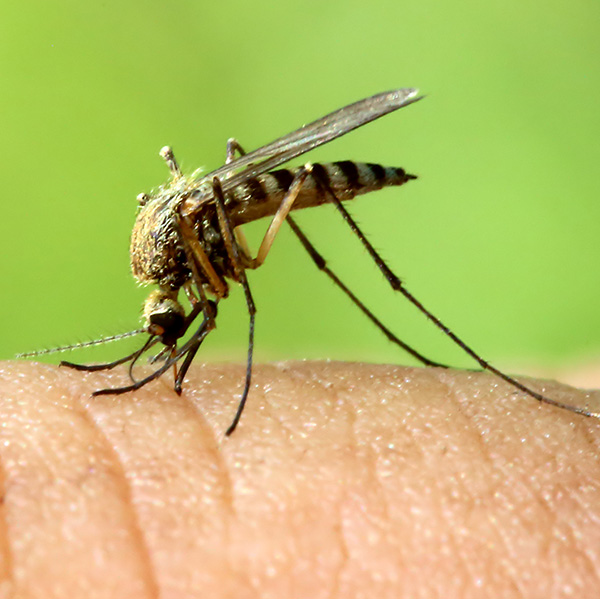
Malaria mosquito, Anopheles
Anopheles
- Insect with chitinous carapace
- Flying, biting, sucking
- Parasite, disease vector
- Hygiene and health pest

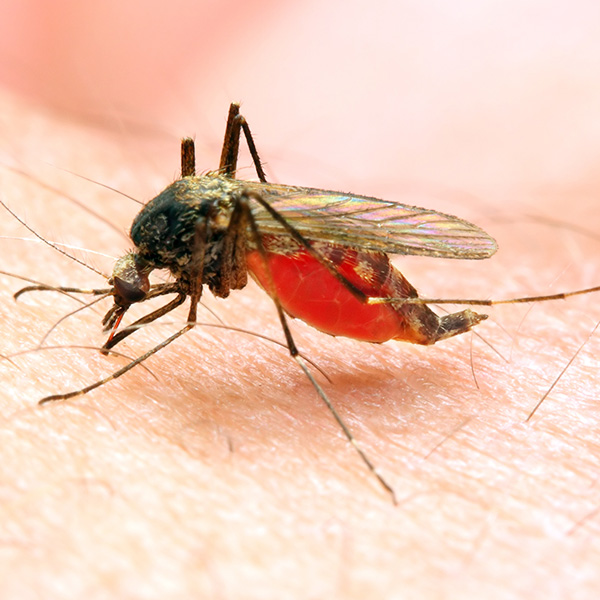
Malaria, transmitted by Anopheles mosquitoes, is a life-threatening disease that is widespread in many tropical and subtropical regions of Africa, Asia and Latin America. About half of the world’s population lives in malaria risk areas and more than 125 million tourists visit these areas every year.
Transmission of diseases
- Malaria is one of the most important infectious diseases in subtropical and tropical regions. It is transmitted by mosquitoes of the genus Anopheles and is caused by single-celled pathogens of the genus Plasmodium, which attack red blood cells (erythrocytes) in the human body.
- The infectious form of the malaria pathogen, the so-called sporozoite, enters the human bloodstream via the saliva of an infected Anopheles mosquito when it bites. The malaria pathogen first attacks the liver, then to a large extent the red blood cells (erythrocytes).
- Not all mosquitoes can transmit malaria pathogens, only certain Anopheles species can. Females need blood to develop their eggs, only they feed on human blood, so only they are dangerous.
- Although the Anopheles mosquito is now widespread on all continents, malaria infections mainly occur in Asia, Africa and South and Central America, in over 100 countries permanently.
In which area does the pest occur?
The area of application decides which products are recommended to control this pest.