
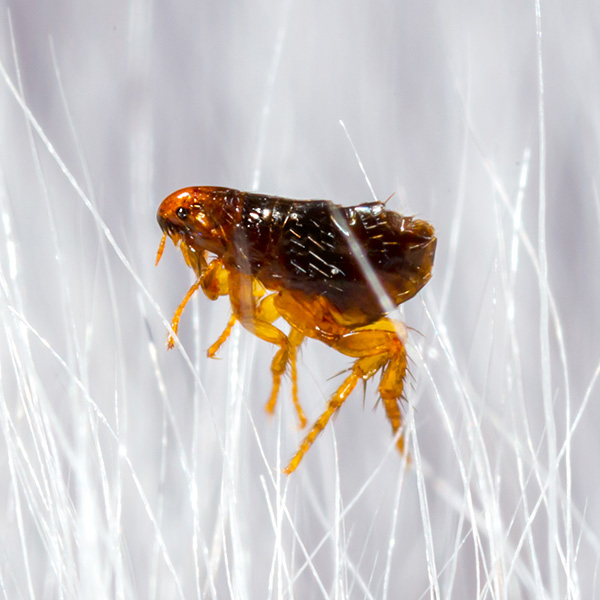
Flea
Siphonaptera
- Insect with chitinous carapace
- Crawling, stinging, sucking
- Parasite, disease vector
- Hygiene and health pest
pecies
- Human flea (Pulex irritans)
- Cat flea (Ctenocephalides felis)
- Dog flea (Ctenocephalides canis)
- Hen flea (Ceratophyllus gallinae)
- Hedgehog flea (Archaeopsylla erinacei)
- Chigoe flea, Sand flea (Tunga penetrans)

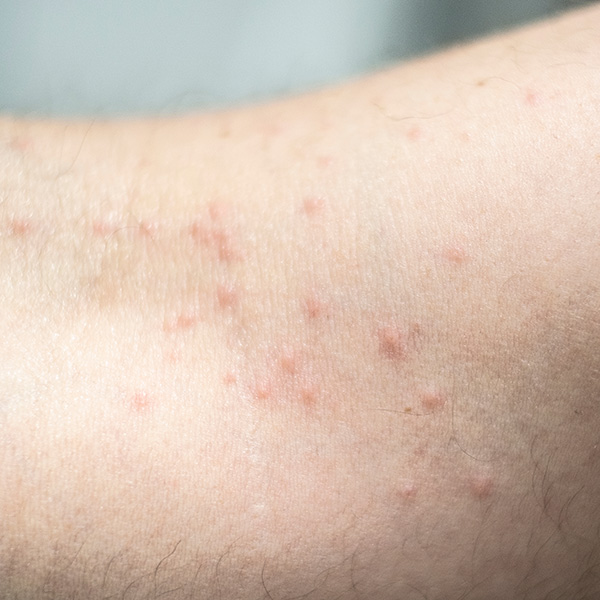
Fleas feed parasitically on the blood of their host, they infest humans as well as different animal species.
Transmission of diseases
- When a flea bites a person, the bite site is usually noticeable by itching and characteristic skin changes (mottled redness or pustules). Several bite sites are usually arranged in a row to form a so-called “flea bite chain”. Besides the annoying itching, flea bites can also transmit various pathogens to humans.
- Flea saliva and its components are considered highly allergic. Some of the ingredients contained can sensitise dogs relatively easily. Therefore, severe allergic flea saliva dermatitis (FAD) can occur.
- Fleas from cats and dogs can transmit Typhoid, Polio, Lyme Disease and Swine Fever to humans.
- It is little known that certain tapeworms can also be transmitted by fleas. This is the case with the cucumber seed tapeworm (Dipylidium caninum), which is found in dogs and cats.
- Cucumber seed tapeworms need fleas as intermediate hosts
In which area does the pest occur?
The area of application decides which products are recommended to control this pest.