
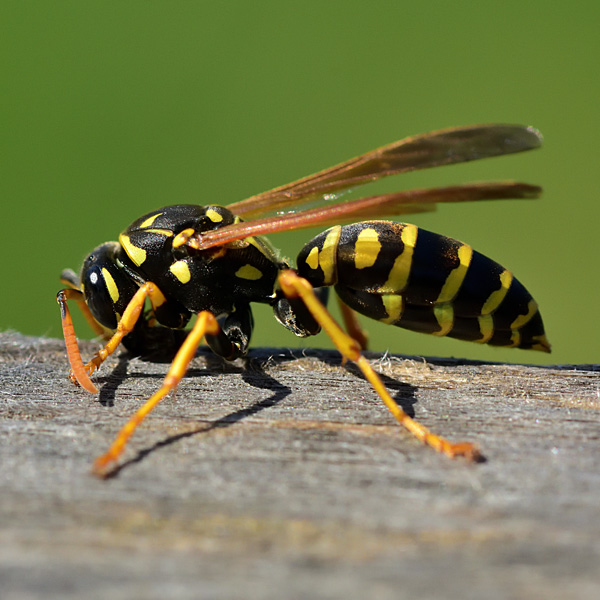
Wasp
Vespinae
- Insect with chitinous carapace
- Flying, venomous
- Annoying pest
- Hygiene and health pest

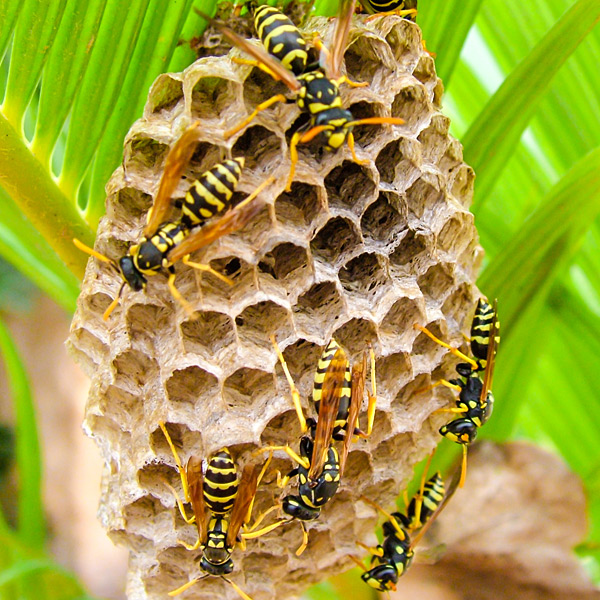
Wasps are primarily annoying pests that can also transmit diseases. Wasp stings are usually harmless, but unpleasant and painful.
Transmission of diseases
- Wasps spread diseases through contact. This means that infection occurs when the insect has previously been in contact with infectious material. When these wasps sting a person, this material enters the sting wound.
- The sting of a wasp is usually completely harmless. Except in allergic people, a wasp sting can cause anaphylactic shock in the worst case. Pain from the puncture is followed by redness and swelling, which develops into oedema within 24 hours. It can cause lower blood pressure, fever, high pulse, itching and even circulatory failure in allergic reactions.
- When stinging, it releases alarm pheromones that attract other animals and stimulate them to sting. If the wasp gets into the mouth or throat while eating or drinking, a sting can lead to life-threatening swelling of the oesophagus or trachea.
In which area does the pest occur?
The area of application decides which products are recommended to control this pest.