
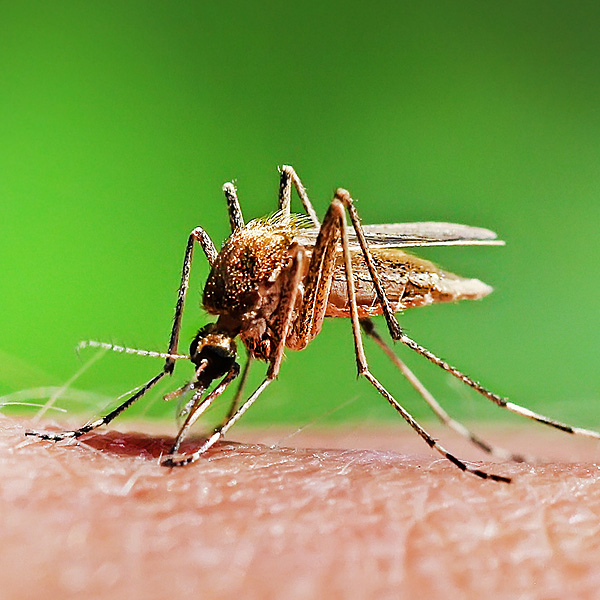
Mosquito
Culicidae
- Insect with chitinous carapace
- Flying, biting, sucking
- Parasite, disease vector
- Annoying pest
- Hygiene and health pest
Bloodsucking species
- Midgies, punkie (Ceratopogonidae)
- Sandflies (Phlebotominae)
- Black flies, Buffalo gnats (Simuliidae)
- ASIAN TIGER MOSQUITO (Aedes albopictus/ Dengue/ Zika)
- ANOPHELES MOSQUITO (Malaria)


Mosquitoes are ubiquitous and dangerous worldwide as unpleasant biting pests, parasites and disease vectors for humans and animals.
Transmission of diseases
- Mosquitoes are frequent vectors of pathogens such as bacteria, viruses and worms, depending on their area of distribution.
- Mosquitoes transmit Malaria, Dengue Fever and Yellow Fever, various filarioses, as well as the Zika Virus and Tularaemia, among others.
- Mosquitoes occur in large numbers and are therefore very annoying in certain areas (Scotland, Scandinavia, Florida, Caribbean). However, as disease vectors they mainly occur in animals and not in humans. The genus Culicoides spreads a filarial called Dipetalonema Perstans in Africa and South America (Yorke and Mapleston 1926), but this usually only causes unproblematic diseases in humans.
- Sandmosquito (sandfly) bites can cause skin reactions (itching, redness, rash) but can also spread various diseases: Sandfly Fever (Phlebotomus, Pappataci or three-day fever), Carrión Disease, Peru Warts, Oroya Fever or Leishmaniasis.
- Black Mosquito (blackfly) bites are usually painful because the mosquito’s saliva carries histamines and anticoagulants into the host’s wound. This can lead to pseudoallergic reactions.
- Certain species of Black Mosquito (blackfly) (Simulium damnosum, neavei, callidum and metallicum) are also known in connection with River Blindness, which is caused by the threadworms transmitted by them. This leads to blindness in about 10% of patients and occurs in Africa, Central America and South America.
In which area does the pest occur?
The area of application decides which products are recommended to control this pest.