
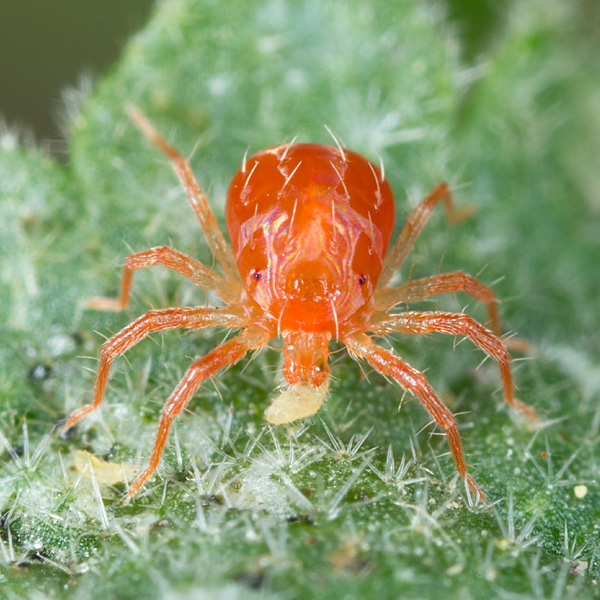
Mites
Acari
- Soft-skinned insect
- Crawling, stinging, sucking
- Parasite
- Agricultural and forest pest
- Stock/Storage pest
Species
- Dust mite (Dermatophagoides)
- Face mite (Demodex)
- Flour mite (Acarus siro)
- Scabies mite (Sarcoptes scabiei)
- Harvest mite (Neotrombicula autumnalis)
- TICK (Ixodida)

Mites belong to the species-rich, eight-legged arachnids, most species are barely visible to the naked eye. Some mite species can trigger diseases and allergies in humans and animals as parasites.
Transmission of diseases
- As a parasite, mites can transmit many diseases, some of which are dangerous. Although TICKS (also a mite species) mainly cause Lyme Disease and early Summer Meningoencephalitis (TBE), and the rare Crimean-Congo Fever, lesser-known species can transmit Typhoid Fever, Rickettsialpox and Tularemia, among others.
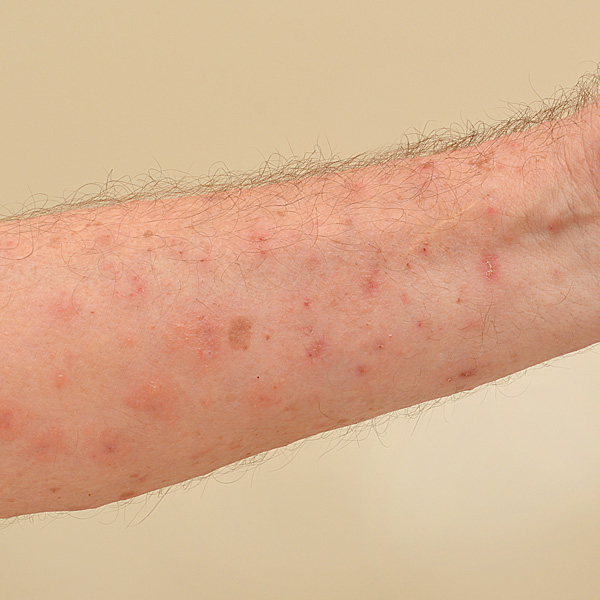
- Disease patterns that are triggered by these parasites in humans are summarised under the term of Acarioses. Scabies is the best-known disease, which causes severe itching due to the activities of the larvae on the skin. Another common disease is a form of Asthma that can occur after years of allergy to house dust mites. House dust is not the trigger of allergic reactions in humans, as is wrongly assumed, it is the excrement of the mites.
- However, many mite species live on humans and animals without causing symptoms. Mites are found in the lungs of primates, the nostrils and feathers of some birds, the hair follicles and eyelashes of humans, and the respiratory organs of some insects (such as beetles and bees).
- Although true grass mites only suck on plants, autumn mites, commonly known as harvest mites, autumn grass mites or hay mites, mainly infest living things. Consequences for humans: Short-term skin diseases (Harvest Scabies).
In which area does the pest occur?
The area of application decides which products are recommended to control this pest.